AI-generated content for informational purposes only. Data should be independently verified. Specifications are drawn from open-source reporting and may not reflect classified assessments.
Iran's ballistic missile programme is the primary long-range strike arm of its military doctrine against Israel. From launch sites inside Iran, every system described on this page can reach any point in Israeli territory. The combination of solid-fuel rapid-launch capability, liquid-fuel heavy warheads, and emerging hypersonic glide vehicles means defenders must simultaneously manage threats operating at fundamentally different physics — from Mach 9 re-entry vehicles to Mach 15 hypersonic gliders, arriving with as little as 4 minutes warning.
Arsenal Overview

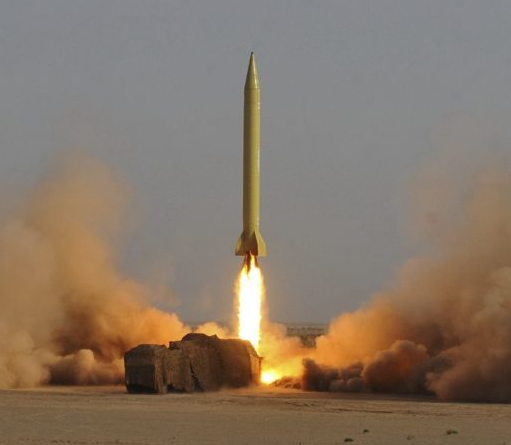
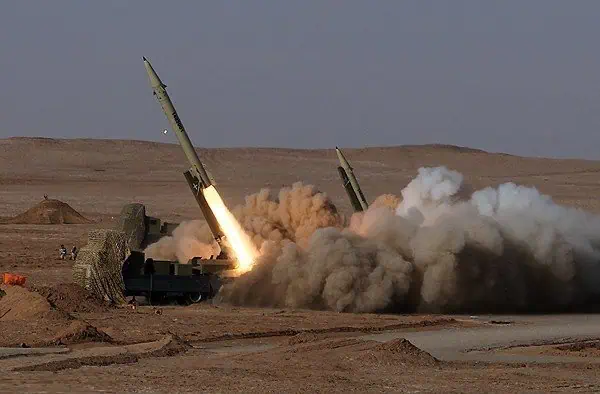
Iran operates the largest ballistic missile arsenal in the Middle East, with a stockpile estimated at over 3,000 missiles across multiple system types. The programme dates to the 1980s and has evolved from early Scud derivatives into indigenously developed precision-guided and hypersonic systems. Iran's ballistic missiles are its primary long-range strike capability against Israel, capable of reaching any point in the country from launch sites inside Iran.

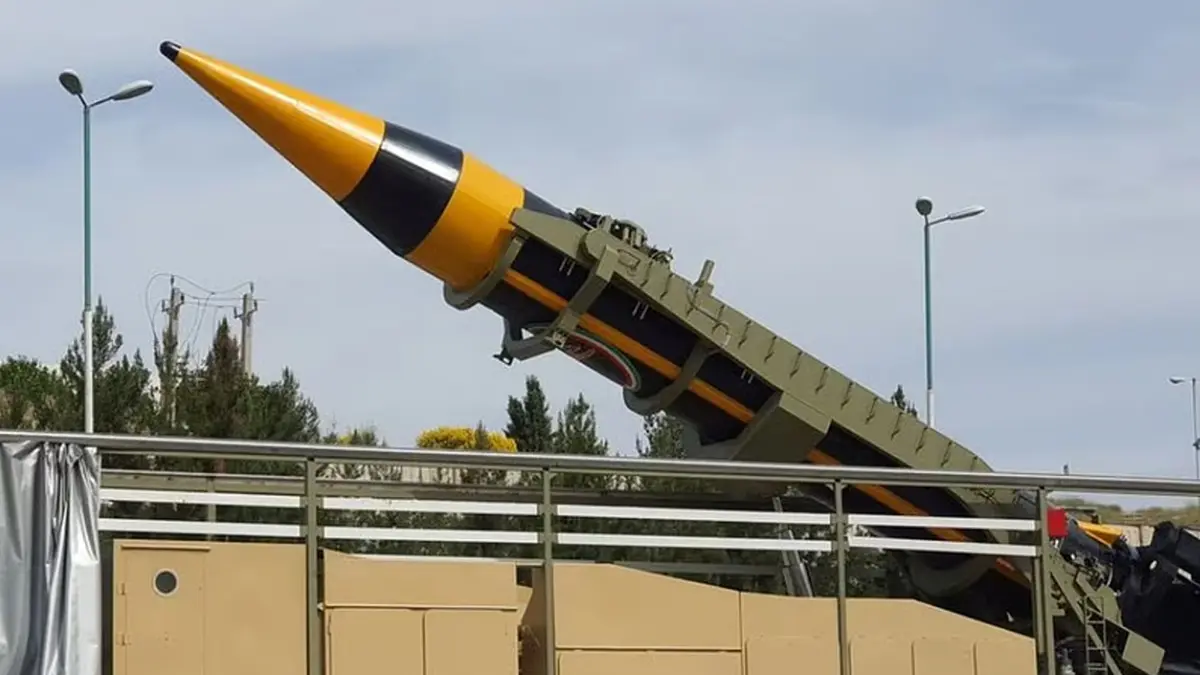
The arsenal emphasises range, warhead mass, and — increasingly — terminal manoeuvrability to defeat interceptor missiles. Newer systems such as the Kheibar Shekan and Fattah-1 represent deliberate attempts to defeat Israel's multi-layered missile defence architecture through speed, trajectory shaping, and manoeuvring re-entry vehicles.

The programme is indigenously controlled by the IRGC Aerospace Force, though its technological lineage draws substantially on North Korean Nodong missile technology (itself derived from Soviet R-17 Scud), with additional assistance historically attributed to Chinese and Russian technical expertise in propellant chemistry, airframe engineering, and guidance systems. Iran now produces all major components domestically.

Interactive Visualization
Ballistic Trajectory — Iran to Israel
Altitude
0 km
Speed
0 km/h
Distance
0 km
Phase
READY
Flight Time
0:00

Side-view animation showing the ballistic arc from western Iran (~1,000 km) to Israel. Standard BMs exit the atmosphere above the Karman Line (100 km) at apogee ~250 km; the Fattah-1 HGV follows a depressed trajectory staying within the upper atmosphere and manoeuvring during glide. Altitude markers and atmosphere layers to scale.

System Specifications

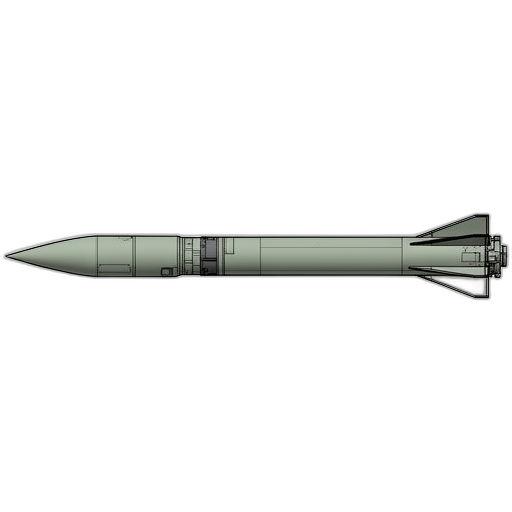
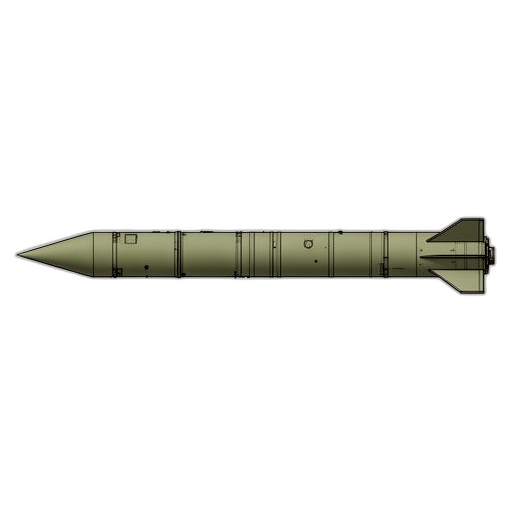
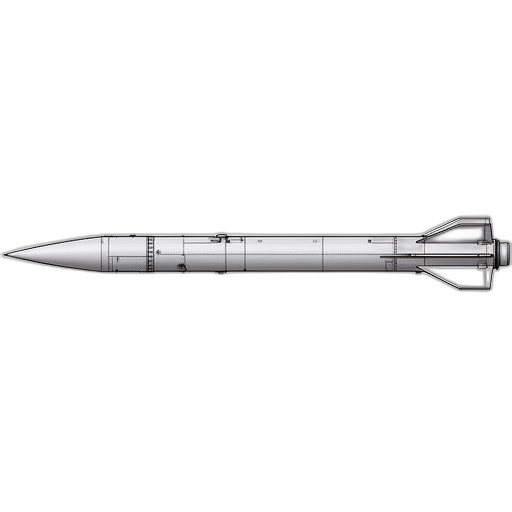
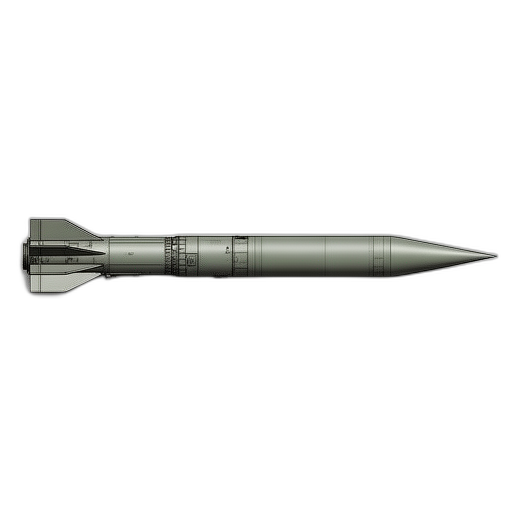
Six primary systems form Iran's operational ballistic missile inventory capable of reaching Israel. Click any system name to jump to the detailed profile below.

System Type Propulsion Range Warhead Speed Navigation / Guidance Year Est. Inventory Key Suppliers / Origin
Emad MRBM Liquid-fuel ~1,700 km ~750 kg Mach 8-10 INS + terminal optical/radar seeker (maneuverable RV) 2015 100-200 Indigenous; Shahab-3/Nodong lineage (DPRK); components historically from China, DPRK
Ghadr MRBM Liquid-fuel ~1,950 km ~750 kg Mach 8-10 INS + possible terminal correction 2007 100-200 Indigenous; Shahab-3 derivative (DPRK Nodong); aluminium airframe technology
Sejjil MRBM Solid-fuel (2-stage) ~2,000 km ~650 kg Mach 10-12 INS only (no confirmed terminal guidance) 2008 / op. ~2011 50-100 Indigenous solid-fuel; propellant chemistry possibly aided by Chinese technical assistance
Kheibar Shekan MRBM Solid-fuel ~1,450 km ~500 kg Mach 8-10 INS + terminal maneuvering (radar or EO seeker) 2022 (unveiled) 50-100 Fully indigenous; represents Iran's mature solid-fuel capability
Fattah-1 Hypersonic MRBM Solid + HGV glide ~1,400 km ~450 kg Mach 13-15 INS + HGV terminal maneuvering (claimed) 2023 (unveiled) 20-50 Indigenous; HGV technology draws on published Chinese/Russian research
Khorramshahr-4 MRBM Liquid-fuel ~2,000 km ~1,500 kg Mach 8-10 INS + terminal guidance (type unconfirmed); MIRV-capable (claimed) 2023 (as Khorramshahr-4) 30-60 Based on BM-25 Musudan / Soviet R-27 lineage (DPRK); heavily modified indigenous design

Inventory estimates are based on open-source assessments and should be treated as approximations. Range figures are for maximum-range configurations; combat trajectories may differ. Data current as of March 2026.

Navigation & Guidance Systems

The evolution of Iranian ballistic missile guidance represents a generational leap in capability. First-generation systems relied entirely on inertial navigation, with accuracies measured in kilometres. Current systems combine inertial platforms with terminal seekers, reducing circular error probable (CEP) to tens of metres — sufficient for targeting hardened infrastructure.

INS — Inertial Navigation System
CEP: ~500 m – 2 km
All Iranian ballistic missiles use INS as the baseline guidance layer. Ring laser gyroscopes or fibre-optic gyroscopes measure acceleration and rotation to calculate position without any external signal source. Accuracy degrades with distance as gyroscopic drift accumulates over the flight time — a missile travelling 1,500 km on INS alone may land 500 m to 2 km from its aim point. This is suitable for area targets (cities, airbases) but insufficient for hardened point targets.
Terminal Guidance
CEP: ~50 – 300 m
Newer systems (Emad, Kheibar Shekan, Fattah-1) activate a terminal seeker during the final descent phase — typically the last 30-60 seconds of flight. Seeker types include:
  • Electro-optical (EO): Camera-based scene matching against stored imagery
  • Radar seeker: Active or semi-active radar for target discrimination
  • Infrared (IR): Heat signature homing (limited open-source confirmation)
Terminal guidance enables the manoeuvrable re-entry vehicle (MaRV) to correct its trajectory, dramatically reducing CEP and making last-second interception by point-defence systems substantially harder.
Satellite Navigation (Non-GPS)
GPS: Not relied upon
Iran does not rely on GPS for missile guidance — the US-operated system could be selectively denied or spoofed in conflict. Instead, open-source reporting indicates Iran has explored:
  • GLONASS (Russian): Integration reported in some systems as a mid-course correction layer
  • BeiDou (Chinese): Potential integration in newer post-2020 designs
  • Indigenous augmentation: Iran has claimed development of satellite navigation ground stations to support indigenous positioning
No open-source confirmation exists for satellite navigation-corrected operational systems at the CEP levels Iran has publicly claimed.
HGV — Hypersonic Glide Vehicle
Speed: Mach 13–15 terminal
The Fattah-1 uses a distinct flight profile: a solid-fuel booster accelerates the payload to high altitude, then an unpowered hypersonic glide vehicle (HGV) separates and follows a depressed, manoeuvring trajectory within the upper atmosphere. Unlike standard ballistic re-entry, which follows a predictable arc, the HGV can alter course laterally during the glide phase. This creates two compounding interception challenges: the trajectory is non-standard (defeating algorithms tuned for ballistic paths), and the terminal speed at Mach 13-15 leaves interceptor systems with a decision window of under one second at close range. Arrow-3 engages above the atmosphere in mid-course; the HGV's glide phase partly avoids this engagement window.
System Profiles

Detailed specifications and operational context for each system in Iran's ballistic missile inventory capable of reaching Israel.

Emad
Liquid-fuel MRBM
Introduced 2015
~1,700
Range (km)
~750 kg
Warhead
Mach 8-10
Speed
2015
Year
100-200
Est. Inventory
Description
The Emad is Iran's first operational precision-guided ballistic missile, unveiled in October 2015. It represents the pivotal shift in Iran's missile doctrine from area-saturation weapons to precision-strike systems. Built on the Shahab-3 / Ghadr airframe using UDMH/IRFNA liquid propellant, the Emad features a separating manoeuvrable re-entry vehicle (MaRV) that allows the warhead to independently guide itself to the target in the terminal phase. This fundamentally changes its defensive calculus: a standard ballistic warhead follows a predictable arc, but the Emad's MaRV can alter trajectory in the final seconds, complicating intercept solutions for Arrow-2 and David's Sling.
Guidance / Navigation
INS throughout boost and mid-course. Terminal phase activates an electro-optical or radar seeker in the MaRV. Claimed CEP of around 500 m; some assessments suggest better accuracy in operational conditions. The terminal seeker activation window begins at approximately 50-80 km altitude during re-entry.
Suppliers / Origin
Indigenous development based on the Shahab-3 lineage, itself derived from the North Korean Nodong-1 (a Scud-C derivative). Propellant technology (UDMH and IRFNA) has roots in Soviet R-27 submarine-launched missile chemistry. Historical open-source reporting attributes some airframe and propulsion component technology to North Korean and Chinese technical cooperation, though Iran now manufactures domestically.
Combat Usage
Round 1 (Apr 2024) Round 2 (Oct 2024) Round 3 (Jun 2025) Round 4 (Feb 2026-) Emad has been present in all four True Promise rounds. In Round 1 it formed the majority of the ballistic missile component alongside Ghadr. By Round 4 it continues to serve as a backbone system, complemented by more advanced solid-fuel types.
Ghadr
Liquid-fuel MRBM
Introduced 2007
~1,950
Range (km)
~750 kg
Warhead
Mach 8-10
Speed
2007
Year
100-200
Est. Inventory
Description
The Ghadr (meaning "power" or "capable" in Farsi) is an extended-range variant of the Shahab-3, achieving greater range through a lighter aluminium airframe, a smaller and lighter triconic warhead section, and optimised fuel loads. Introduced in 2007, it extended Iran's reliable reach from roughly 1,300 km (Shahab-3) to approximately 1,950 km, placing all of Israel well within range from central and even eastern Iran. The Ghadr represents the mature end of Iran's liquid-fuel Scud-derivative lineage and remains one of the most numerous systems in the arsenal.
Guidance / Navigation
Primary guidance is inertial navigation system (INS). Some open-source assessments note possible terminal correction capability in later production variants, though this is less definitively confirmed than in the Emad. CEP estimates range from 800 m to 2.5 km for standard INS-only variants. The Ghadr does not carry a manoeuvrable re-entry vehicle, making its warhead trajectory more predictable during terminal descent.
Suppliers / Origin
Directly evolved from the Shahab-3, itself based on the North Korean Nodong-1. The aluminium airframe technology used to reduce weight was a key engineering advance incorporated in this programme. Propellant remains UDMH (unsymmetrical dimethylhydrazine) with IRFNA (inhibited red fuming nitric acid) oxidiser, requiring several hours of fuelling before launch — a significant operational vulnerability compared to solid-fuel systems.
Combat Usage
Round 1 (Apr 2024) Round 2 (Oct 2024) Round 3 (Jun 2025) Round 4 (Feb 2026-) Used across all four rounds as a volume system. In Round 1, Ghadr and Emad formed the core of the approximately 120 ballistic missiles fired. Its liquid-fuel requirement means it typically launches later in a coordinated salvo, after solid-fuel systems that can be pre-fuelled and held ready.
Sejjil
Solid-fuel MRBM (2-stage)
Tested 2008 / Operational ~2011
~2,000
Range (km)
~650 kg
Warhead
Mach 10-12
Speed
~2011
Operational
50-100
Est. Inventory
Description
The Sejjil is Iran's first fully indigenous two-stage solid-fuel ballistic missile and a watershed achievement in the programme. Unlike the liquid-fuel Shahab/Ghadr family, the Sejjil requires no pre-launch fuelling, meaning it can be stored in a ready-to-launch state and fired within minutes of an order. The two-stage solid propellant configuration drives a faster boost phase, pushing terminal velocities up to Mach 10-12 — higher than any Iranian liquid-fuel system. The combination of rapid launch, long range (~2,000 km), and high terminal velocity makes Sejjil the most operationally survivable and tactically responsive ballistic missile in the pre-hypersonic Iranian inventory.
Guidance / Navigation
INS-only guidance with no confirmed terminal seeker. This limits CEP to an estimated 500 m to 1.5 km — area-target accuracy rather than point-strike precision. The Sejjil's value lies in its speed and launch-readiness rather than pinpoint accuracy. Its high terminal velocity (above Mach 10) reduces the interception window for Arrow-2 and makes the geometry for THAAD engagement challenging.
Suppliers / Origin
Described as fully indigenous, though Iran's solid-propellant chemistry programme is believed to have benefited from technical knowledge drawn from Chinese sources, particularly regarding composite solid propellant formulation. The two-stage design represents a significant engineering step beyond the single-stage Shahab family. Iran now manufactures its own composite solid propellant at facilities in the Tehran and Isfahan regions.
Combat Usage
Round 3 (Jun 2025) Round 4 (Feb 2026-) Sejjil was confirmed in use from Round 3 onward as Iran escalated to its highest-volume campaigns. Its rapid-launch capability makes it particularly suited to surprise elements within coordinated salvos.
Kheibar Shekan
Solid-fuel MRBM
Unveiled 2022
~1,450
Range (km)
~500 kg
Warhead
Mach 8-10
Speed
2022
Unveiled
50-100
Est. Inventory
Description
Kheibar Shekan ("Kheibar Breaker") was unveiled in February 2022 and represents the synthesis of two capabilities Iran had previously pursued separately: solid-fuel rapid launch and terminal precision guidance. Unlike the Sejjil (which has solid fuel but INS-only guidance) or the Emad (which has terminal guidance but liquid fuel), the Kheibar Shekan combines solid-fuel instant readiness with an active terminal seeker. The name is a historical reference to the Battle of Khaybar (628 CE) — rhetorical messaging that the weapon is designed to breach the defences protecting Israel. It is assessed to be in active production with inventory growing rapidly as of 2026.
Guidance / Navigation
INS throughout boost and mid-course, transitioning to a terminal seeker in the final descent phase. The seeker type is assessed as likely radar or electro-optical (possibly both in some variants) based on the shape of the manoeuvrable re-entry vehicle visible in Iranian state media images. CEP is assessed at approximately 100-300 m, representing a meaningful accuracy improvement over INS-only systems for targeting hardened infrastructure such as air defence batteries, command facilities, or runways.
Suppliers / Origin
Assessed as fully indigenous, drawing on Iran's accumulated solid-propellant engineering from the Sejjil programme and terminal guidance technology from the Emad line. It represents the convergence of these two development tracks into a single, operationally superior system. No foreign supplier involvement has been identified in open-source reporting for this specific missile.
Combat Usage
Round 2 (Oct 2024) Round 3 (Jun 2025) Round 4 (Feb 2026-) First used operationally in Round 2 alongside other types in the all-ballistic-missile salvo. Increasingly prominent in Rounds 3 and 4 as production volumes grew. Its combination of rapid launch and terminal precision makes it the primary system for strikes against defended point targets.
Fattah-1
Solid + HGV Hypersonic MRBM
Unveiled June 2023
~1,400
Range (km)
~450 kg
Warhead
Mach 13-15
Terminal Speed
2023
Unveiled
20-50
Est. Inventory
Description
The Fattah-1 ("Conqueror") was unveiled by Iran in June 2023, claimed as the country's first hypersonic missile. Unlike conventional ballistic missiles, the Fattah-1 uses a two-phase flight profile: a solid-fuel first stage boosts the vehicle to high altitude, then a hypersonic glide vehicle (HGV) separates and follows a depressed, manoeuvring trajectory within the atmosphere at speeds of Mach 13-15. This profile is fundamentally different from standard ballistic re-entry in ways that matter operationally: the HGV's trajectory is non-predictable, it does not follow the classic parabolic arc that missile defence engagement algorithms are optimised for, and its extreme speed leaves interceptors with a decision window measured in fractions of a second at close range. Iran unveiled a follow-on variant (Fattah-2) in 2023, with claimed improvements in range and manoeuvrability.
Guidance / Navigation
INS in the boost phase. The HGV is claimed by Iran to incorporate terminal guidance and manoeuvring capability, though the degree to which this has been operationally validated is unclear from open sources. At Mach 13-15 terminal velocity, even limited lateral manoeuvrability substantially reduces an interceptor's probability of kill. The HGV's glide phase partly avoids the exo-atmospheric engagement window that Arrow-3 is optimised for, while the terminal speed defeats the close-in geometry available to Arrow-2 and THAAD.
Suppliers / Origin
Assessed as indigenous, drawing on published scientific literature and engineering knowledge from Chinese and Russian hypersonic research programmes. Iran has published academic papers on hypersonic aerodynamics and heat management through its universities, suggesting a domestic research base developed over the preceding decade. No foreign government supply of HGV hardware has been confirmed in open sources. The solid-fuel first stage uses technology from the established Sejjil/Kheibar Shekan programme.
Combat Usage
Round 2 (Oct 2024) Round 4 (Feb 2026-) First used in Round 2. Given estimated inventory of 20-50, Fattah-1 is employed selectively against the highest-value defended targets. Its primary operational purpose is to create intercept uncertainty: even a handful of hypersonic gliders in a salvo forces defenders to divert high-value interceptors (Arrow-3) from other threats.
Khorramshahr-4
Liquid-fuel MRBM (Heavy)
Unveiled 2023 (as Khorramshahr-4)
~2,000
Range (km)
~1,500 kg
Warhead
Mach 8-10
Speed
2023
Current variant
30-60
Est. Inventory
Description
The Khorramshahr-4 (named after the Iranian city besieged during the Iran-Iraq War) carries the heaviest conventional warhead of any confirmed system in Iran's inventory at approximately 1,500 kg — double the payload of most other Iranian MRBMs. This mass is achieved through its lineage: the Khorramshahr series traces to the North Korean BM-25 Musudan, itself derived from the Soviet R-27 submarine-launched ballistic missile, a design optimised for heavy payloads. The warhead section is large enough to accommodate multiple smaller submunitions or — as Iran has publicly claimed, without confirmed independent verification — multiple independently targeted re-entry vehicles (MIRV). Regardless of whether MIRV capability is operational, the 1,500 kg warhead class represents significant destructive potential against infrastructure targets.
Guidance / Navigation
INS throughout flight with terminal guidance of unconfirmed type in the latest Khorramshahr-4 variant. Iran's public claims of MIRV capability would require a bus vehicle and post-boost guidance system, the operational status of which has not been independently verified. At Mach 8-10, terminal velocity is comparable to older liquid-fuel types, making it more susceptible to Arrow-2 and THAAD intercept than the Sejjil or Fattah-1. Its value is warhead mass, not speed or manoeuvre.
Suppliers / Origin
Based on technology derived from the North Korean BM-25 Musudan (also designated Hwasong-10), which itself was reverse-engineered from Soviet R-27 submarine-launched ballistic missile technology. Iran received Musudan missiles from North Korea as early as 2005 according to some assessments, forming the basis for the Khorramshahr development programme. The Khorramshahr-4 is a substantially modified and indigenised design. Propulsion uses the same UDMH/IRFNA liquid propellant combination as the Ghadr and Emad.
Combat Usage
Round 4 (Feb 2026-) First confirmed in operational use during Round 4. The decision to deploy the 1,500 kg warhead class signals a shift toward higher destructive-yield strikes against hardened or large-area targets, consistent with Round 4's multi-theatre targeting pattern.
Speed Comparison

Ballistic missiles travel 8 to 15 times faster than a commercial airliner. The Fattah-1 hypersonic glide vehicle reaches speeds where conventional interception becomes extremely difficult, with a decision-to-intercept window measured in seconds. Bars scaled to Mach 15 = 100%.

Airbus A380 reference / 945 km/h
0.89
Mach 0.89
Emad / Ghadr liquid BM / ~11,000 km/h
Mach 9
Mach 9
Kheibar Shekan solid BM / ~11,000 km/h
Mach 9
Mach 9
Khorramshahr-4 heavy BM / ~11,000 km/h
Mach 9
Mach 9
Sejjil solid BM / ~13,500 km/h
Mach 11
Mach 11
Fattah-1 hypersonic HGV / ~16,000 km/h
Mach 13-15
Mach 13-15

Bars scaled to Mach 15 = 100%. Commercial airliner shown as baseline reference. The visible gap between the A380 and ballistic missile entries reflects a true physical discontinuity of an order of magnitude or more.

Scale of the Threat
How Fast Is a Ballistic Missile?
Walking 5 km/h · Mach 0.004
5 km/h
Car (highway) 120 km/h · Mach 0.10
120 km/h
Bullet train 320 km/h · Mach 0.27
320 km/h
Commercial jet 950 km/h · Mach 0.89
Mach 0.89
950 km/h
Fighter jet (top speed) 3,000 km/h · Mach 2.5
Mach 2.5
3,000 km/h
Ballistic missile (Emad/Sejjil) 11,000 km/h · Mach 9-11
Mach 9-11 — 11x a jet
11,000 km/h
Fattah-1 HGV terminal 18,500 km/h · Mach 15
Mach 15 — 19x a jet
18,500 km/h

Bars animate when scrolled into view. At Mach 9-11, a ballistic missile is travelling 11-14 times faster than a commercial airliner. At Mach 15, the Fattah-1 covers 1,000 km in under four minutes — faster than any current interceptor can reposition.

Flight Time Summary

The short flight time of ballistic missiles from western Iran is the defining tactical challenge for Israeli air defence. From launch detection to impact is measured in minutes, not hours. The figures below represent straight-line theoretical estimates.

Western Iran (Kermanshah region, ~1,000 km to Tel Aviv)

Fattah-1 (Hypersonic)
~4
minutes to Tel Aviv
Sejjil (Solid-fuel BM)
~5
minutes to Tel Aviv
Emad / Ghadr / Kheibar Shekan
5-6
minutes to Tel Aviv

Central Iran (Isfahan region, ~1,500 km to Tel Aviv)

Fattah-1 (Hypersonic)
~6
minutes to Tel Aviv
Sejjil (Solid-fuel BM)
~7
minutes to Tel Aviv
Emad / Ghadr / Kheibar Shekan
7-8
minutes to Tel Aviv
Flight times are theoretical estimates based on straight-line distance and published speed data. Actual trajectories, boost phases, and routing may differ significantly. Ballistic missile times assume a depressed trajectory; standard lofted trajectories may be longer. The Fattah-1 estimate is particularly uncertain given limited operational data on its HGV glide profile.
Interactive Simulation
From Launch to Impact — Real-Time
Missile type
Target
Press LAUNCH to start the clock. The countdown shows the time a defender has from IR satellite detection of launch to missile impact.
--:--
SELECT TYPE & LAUNCH
■ BOOST
■ MID-COURSE
■ TERMINAL

Detection lag: IR satellite systems (DSP/SBIRS) typically detect launch within 30-60 seconds; notification to Israeli command adds further seconds. Intercept decisions for Arrow-3 must be made within the first 2-3 minutes of a standard ballistic trajectory. For HGV trajectories, the engagement window is further compressed.

Scale Visualization
A Single Salvo — Volume & Cost
Ballistic missiles in a single large wave (e.g. Round 3)
0
Each missile (Kheibar Shekan est.)
$0M
× 200 = $0M
vs
Each interceptor (Arrow-2 est.)
$0M
× 200 = $0M
Cost ratio — attacker vs. defender per missile
Attacker spends ~$2M / Defender spends ~$10M per exchange — a 5:1 cost disadvantage that compounds across hundreds of intercepts per round.

Cost estimates are based on open-source and analyst reporting (Arrow-2: ~$3-10M per interceptor; Kheibar Shekan BM: ~$1-3M estimated per unit). The core strategic logic: if defenders must spend more to intercept than attackers spend to fire, saturation campaigns erode interceptor magazines faster than they can be replenished.

Round-by-Round Usage

Iran has launched ballistic missiles against Israel in all four True Promise rounds, with each round seeing an increase in volume and system diversity.

Round BMs Fired Key Types Used Notable
Round 1
April 2024
~120 Emad, Ghadr First direct Iranian ballistic missile strike on Israel; majority intercepted by Arrow-2, Arrow-3, and US/UK/Jordanian forces
Round 2
October 2024
~200 All types incl. Fattah-1, Kheibar Shekan Ballistic missile-only approach; some rounds penetrated defences and struck Israeli territory; first operational Fattah-1 use
Round 3
June 2025
~500+ Mixed including Sejjil, Kheibar Shekan, Emad, Ghadr Sustained campaign over 12 days; saturation approach designed to exhaust interceptor stocks; Sejjil confirmed in operational use
Round 4
February 2026 – ongoing
Ongoing All types incl. Khorramshahr-4 Multi-theatre targeting; Khorramshahr-4 deployed with 1,500 kg warhead class; widest system diversity of any round

See full rounds analysis →

Browse Individual Systems

Click any system for full specifications, photos, and sources.
AI-generated content for informational purposes only. Data should be independently verified. Specifications are drawn from open-source reporting and may not reflect classified assessments. Inventory estimates are approximations based on publicly available analysis. Reference data current as of March 2026.