Sejjil
Iran's first indigenous two-stage solid-fuel MRBM — the longest-range solid-fuel ballistic missile in the Iranian inventory at 2,000 km.
Reference data current as of March 2026.
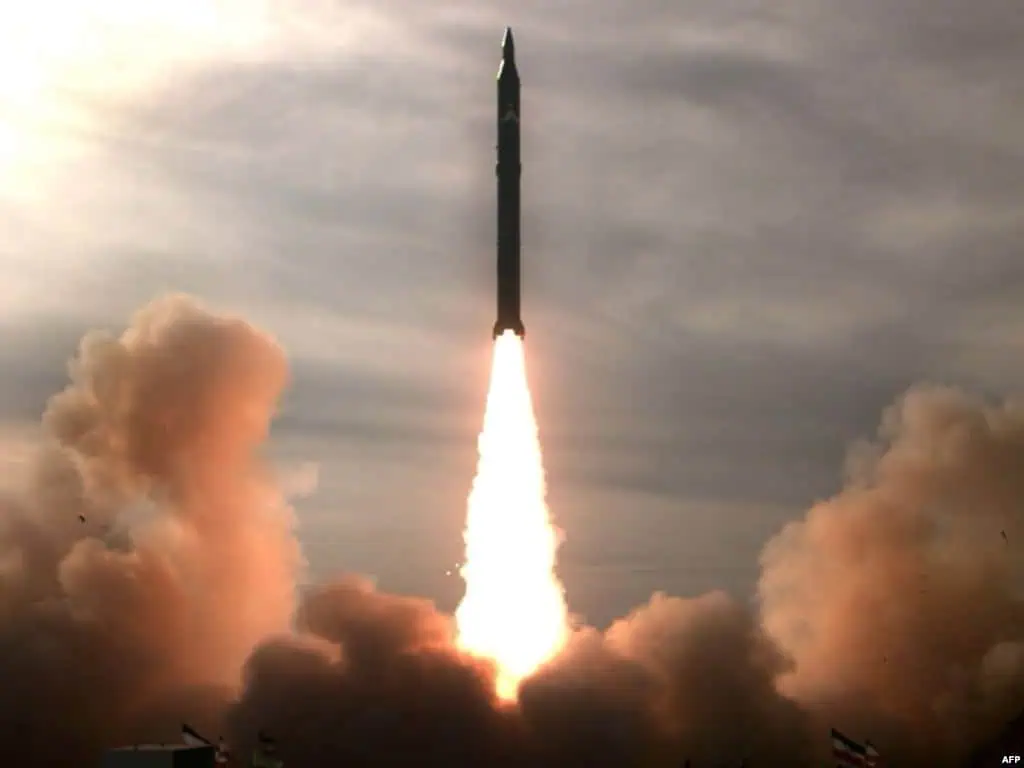
The Sejjil (also known as Ashura) is a landmark in Iran's missile programme — the country's first two-stage solid-fuel MRBM and an entirely indigenous design, not derived from foreign predecessors. At 2,000 km range, it is the longest-range solid-fuel ballistic missile in the Iranian arsenal, placing the entirety of Israel within reach from deep inside Iranian territory. Its solid-fuel propulsion gives it a critical operational advantage over liquid-fuel Shahab-3 derivatives: significantly faster launch preparation time, as it can be stored fuelled and ready to fire. The guidance system was upgraded from 2021, potentially including satellite corrections, though this is unconfirmed by open-source analysis. Despite its capabilities, MaRV is not confirmed for the Sejjil.
- Iran's first two-stage solid-fuel MRBM — entirely indigenous design
- Longest-range solid-fuel missile in the Iranian inventory (2,000 km)
- Faster launch preparation than liquid-fuel predecessors — can be stored fuelled
- Upgraded guidance from 2021; satellite corrections unconfirmed
- MaRV capability unconfirmed despite some reports
The Sejjil's first confirmed combat use was in June 2025 during True Promise 3. Its 2,000 km range allows launches from deep within Iranian territory, reducing exposure to pre-emptive strike. Combined with its solid-fuel propulsion and faster launch cycle, the Sejjil is one of Iran's most operationally survivable strategic systems.
AI-generated content for informational purposes only. Data should be independently verified against primary sources.