Iron Dome
The world's most combat-proven air defence system — Israel's short-range interceptor with thousands of operational engagements since 2011, forming the lowest layer of the multi-tier defence.
Reference data current as of March 2026.
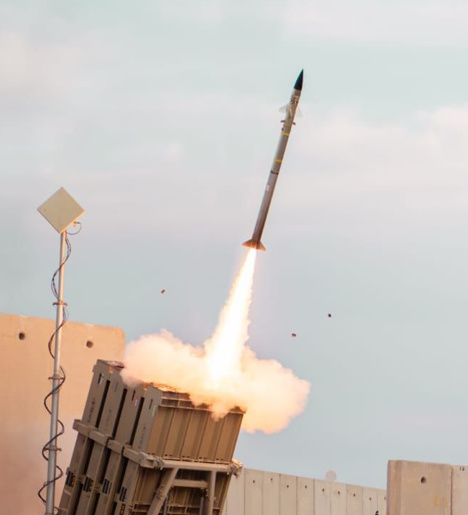
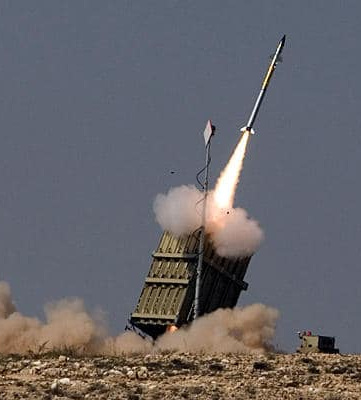
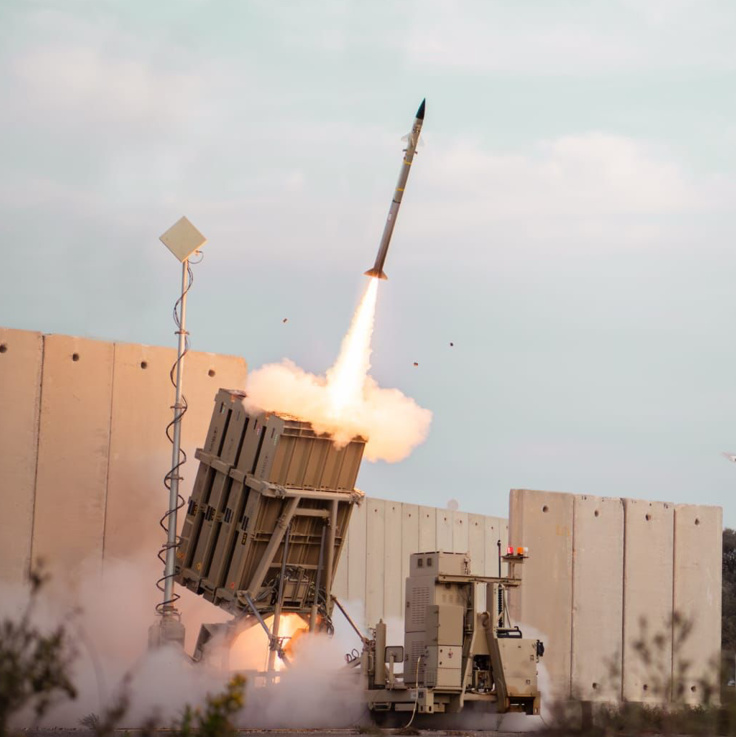
Iron Dome (Kipat Barzel) is the lowest layer of Israel's multi-tiered air defence architecture and the most combat-tested air defence system in the world. Since its first operational intercept in April 2011, it has conducted thousands of engagements against rockets, mortars, UAVs, and cruise missiles. Each battery consists of 3–4 launchers carrying 20 Tamir interceptors each (60–80 total), an EL/M-2084 multi-mission radar for tracking, and a battle management and control (BMC) centre. The system's key innovation is its trajectory prediction algorithm — it calculates whether an incoming projectile will land in a populated area and only intercepts those that pose a genuine threat, conserving interceptors. The Tamir interceptor uses an electro-optical seeker combined with active radar for terminal homing and a proximity-fused fragmentation warhead.
- World's most combat-proven air defence system — thousands of engagements since 2011
- Selective interception: only engages threats predicted to hit populated areas
- Tamir interceptor with electro-optical + active radar seekers
- EL/M-2084 radar provides tracking and fire control
- Each battery carries 60–80 interceptors across 3–4 launchers
- Relatively low interceptor cost (~$50K) but still expensive against $200 rockets
Iron Dome has been in continuous operational use since April 2011, with major engagements during every Gaza conflict and the True Promise operations. In the Iran-Israel context, Iron Dome serves as the last line of defence against OWA drones (Shahed-136, Shahed-131) and cruise missiles that penetrate the higher-altitude layers. However, the cost-exchange problem is acute: a ~$50K Tamir interceptor against a ~$20K Shahed-136 is marginally viable, but against cheaper rockets it becomes unsustainable at scale — a dynamic that drives investment in directed-energy alternatives like Iron Beam.
AI-generated content for informational purposes only. Data should be independently verified against primary sources.