Aegis BMD / SM-3
The US Navy's sea-based ballistic missile defence — ship-launched SM-3 interceptors providing exoatmospheric hit-to-kill capability from Aegis-equipped destroyers and cruisers.
Reference data current as of March 2026.
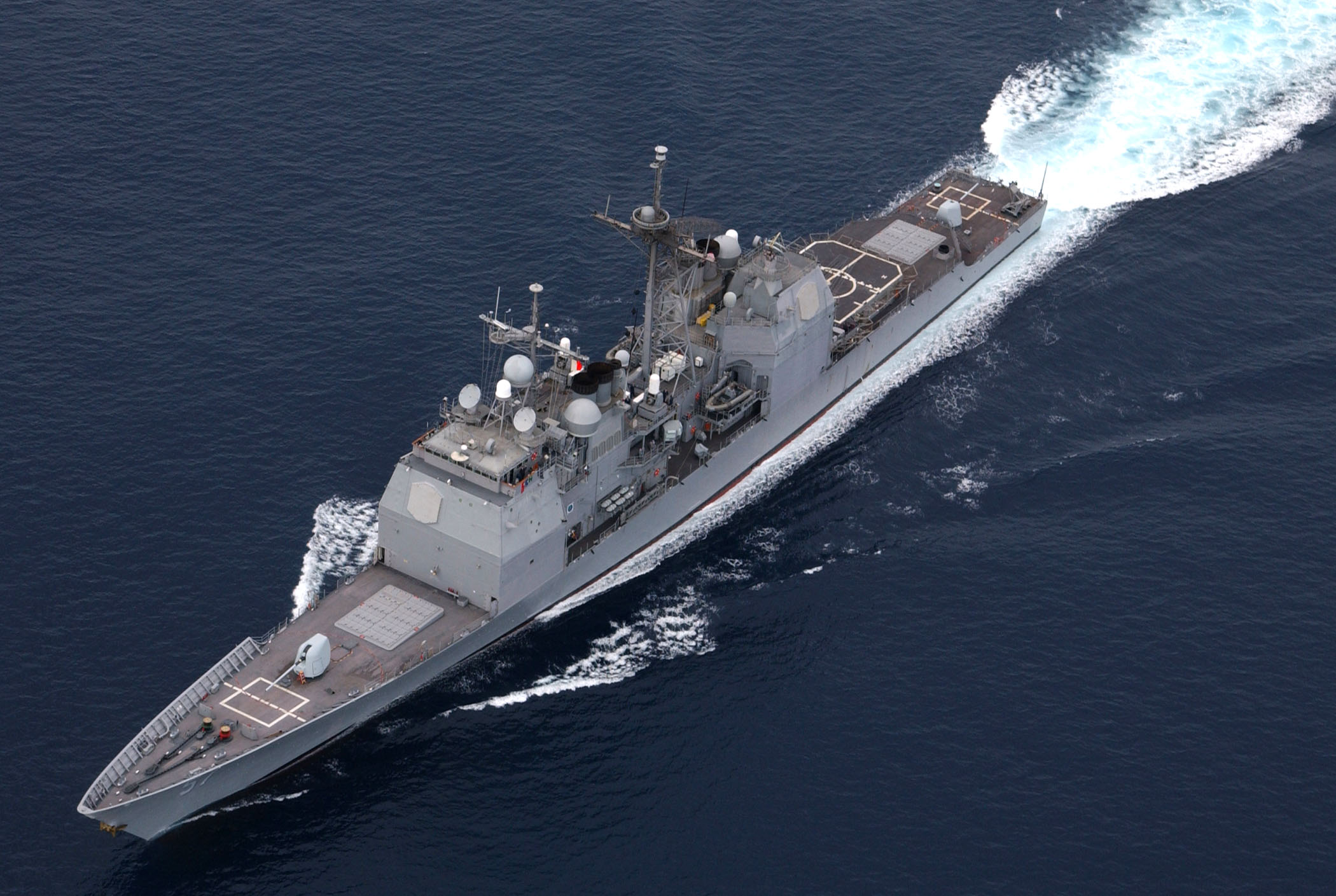
Aegis Ballistic Missile Defense (BMD) is the US Navy's contribution to the multi-layered missile defence architecture, providing sea-based exoatmospheric interception from Arleigh Burke-class destroyers and Ticonderoga-class cruisers. The SM-3 (Standard Missile-3) interceptor is a three-stage ship-launched missile that deploys a LEAP (Lightweight Exo-Atmospheric Projectile) kinetic warhead — a small kill vehicle with an IIR seeker and divert thrusters that achieves a direct hit-to-kill impact in space. The system's key advantage is mobility: Aegis ships can be positioned anywhere in the Eastern Mediterranean or Persian Gulf to create a forward intercept layer, engaging threats thousands of kilometres from their launch sites during the midcourse phase of flight. Aegis ships also function as critical sensor nodes, sharing track data via Link 16 with Israeli and US land-based BMD systems.
The Block IIA is a joint US-Japan development with 21-inch second and third stages (vs 13.5-inch in Block IA/IB), providing dramatically greater range and burnout velocity. At up to $36M per interceptor, it is the most expensive interceptor in active service — a cost that becomes strategically significant when engaging $20K Shahed drones.
- Sea-based mobility — ships can be positioned to create forward intercept screens
- Exoatmospheric hit-to-kill via LEAP kinetic warhead with IIR seeker
- Block IIA: 2,500 km range, 500 km intercept altitude — capable against ICBMs
- Dual role: BMD interceptor + critical sensor node sharing track data via Link 16
- Most expensive interceptor in service ($28M–$36M for Block IIA)
- Launched from standard Mk 41 VLS cells on Aegis ships
SM-3 Block IIA achieved its first combat use on 13 April 2024 during True Promise 1, when USS Carney and other Aegis destroyers in the Eastern Mediterranean engaged Iranian ballistic missiles during their midcourse flight phase. This marked the first confirmed sea-based exoatmospheric combat interception. Aegis ships have continued to play a critical role in subsequent True Promise operations, providing forward intercept capability and sensor data to the multinational BMD network. The system's extreme per-shot cost ($28M–$36M) has intensified debate about the sustainability of kinetic interception against mass salvo attacks.
AI-generated content for informational purposes only. Data should be independently verified against primary sources.