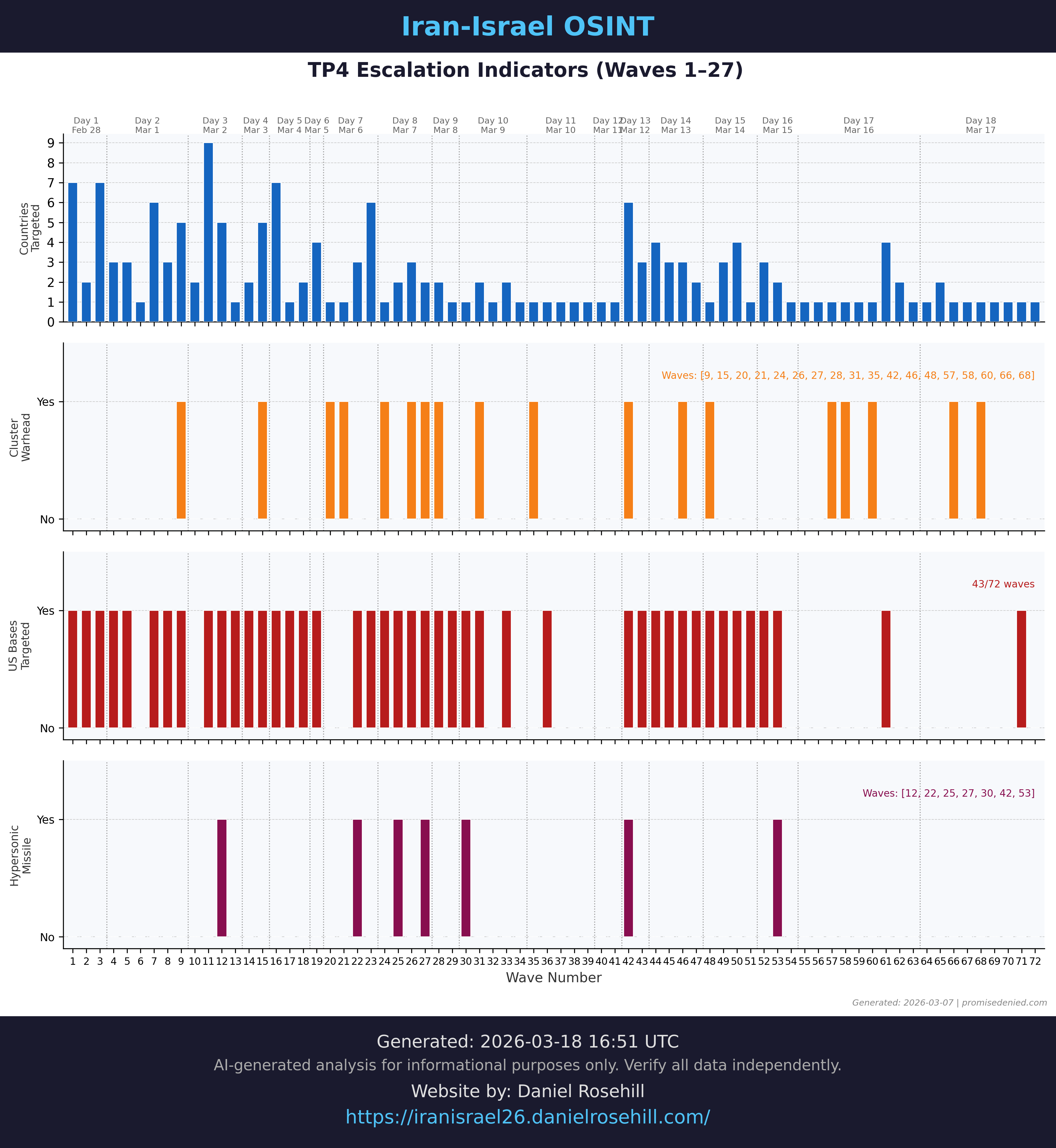
Day 7: Operational Pause Breaks — Three Salvos, Two New Missile Systems
After a 24-hour operational pause — the first since TP4 began on February 28 — Iran resumed strike operations on Day 7 with three salvos that represented both a quantitative and qualitative escalation. The introduction of two new missile systems (Khorramshahr-4 and Fattah hypersonic) and the simultaneous targeting of six countries in a single salvo mark a new phase of the operation.
The Three Salvos
Salvo 21 — 03:30 UTC (05:30 IST)
Codenamed "Ya Mu'izz al-Mu'minin," this pre-dawn salvo continued the cluster munition pattern from Salvo 20 with Kheibar Shekan ballistic missiles carrying cluster warheads, paired with suicide drone swarms. The target was Tel Aviv, with the combination designed to saturate multi-layered air defences. The IRGC claimed the cluster submunitions rendered Iron Dome, David's Sling, and Arrow "largely ineffective" — a claim that remains unverified.
Salvo 22 — 11:30 UTC (13:30 IST) — Major Escalation
The most significant salvo of Day 7. Codenamed "Ya Hossein ibn Ali," Salvo 22 introduced two new weapon systems to the TP4 arsenal:
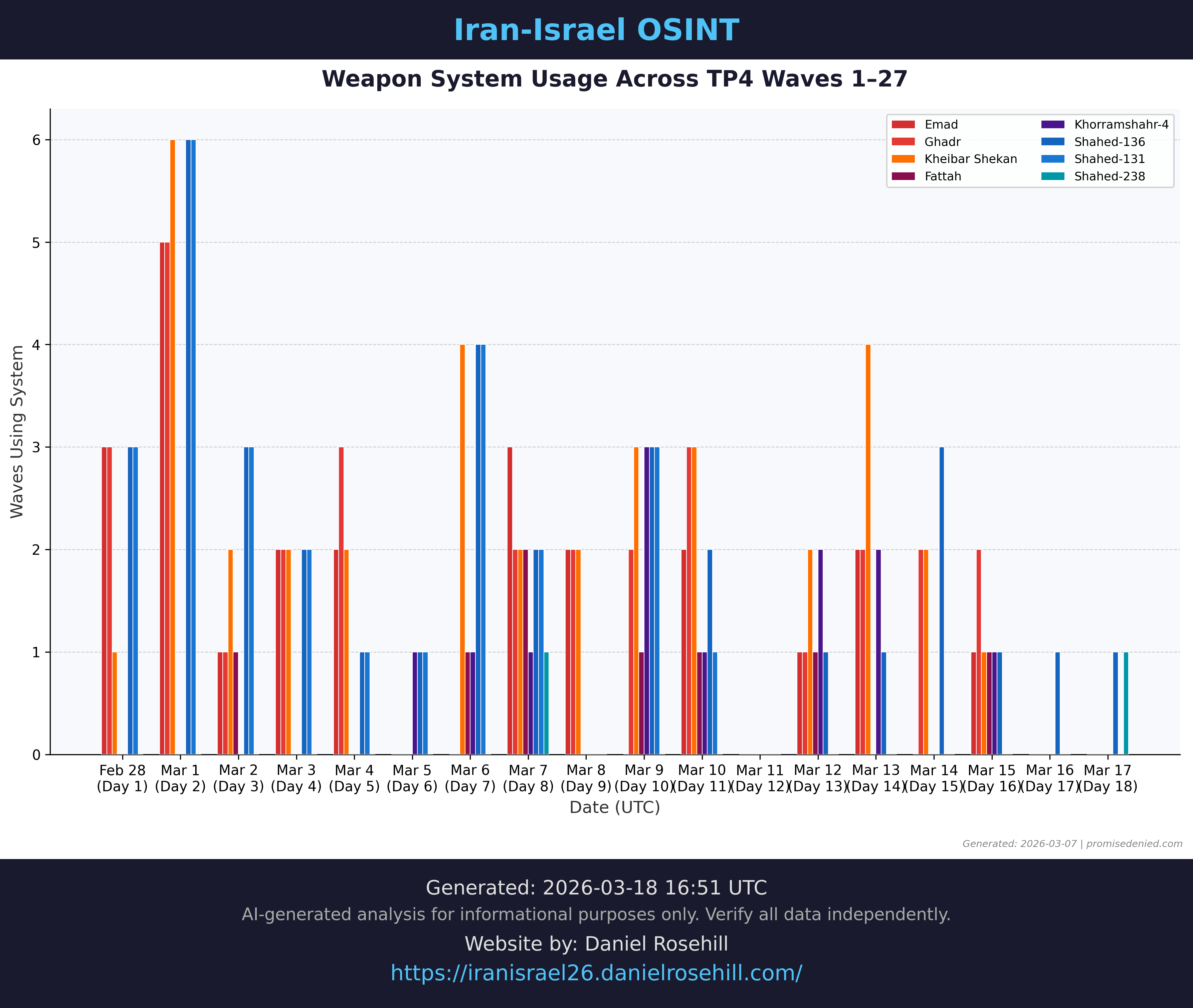
- Khorramshahr-4: Iran's heaviest operational ballistic missile, carrying a ~1,500 kg warhead and reaching Mach 16 during exo-atmospheric flight (Mach 8 atmospheric). This system is designed to overwhelm terminal defence through sheer kinetic energy and warhead mass.
- Fattah hypersonic missile: Equipped with a maneuverable re-entry vehicle (MaRV), the Fattah complicates interception at all defence layers. Its combat effectiveness is unverified.
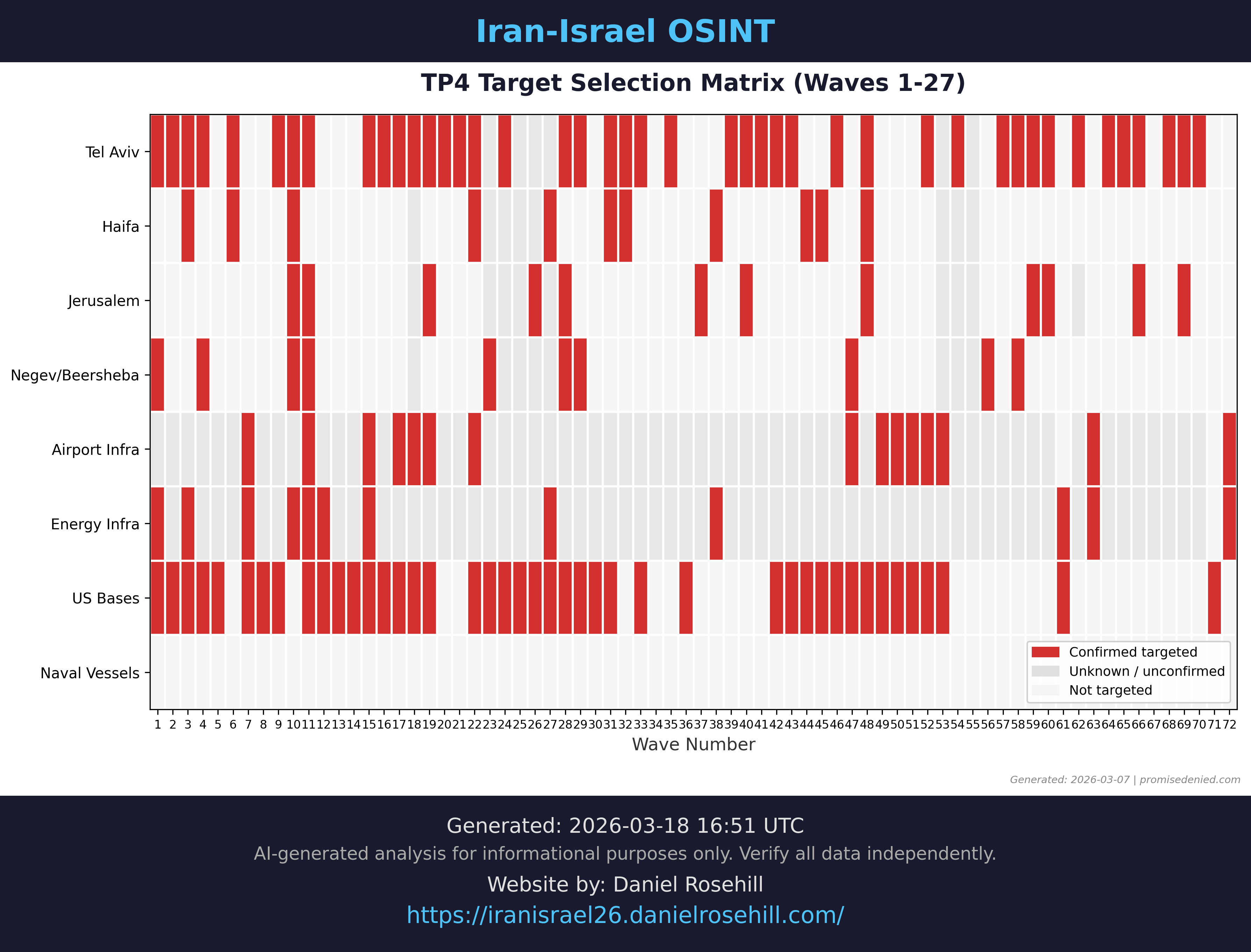
Targets expanded to include Ben Gurion Airport (Israel's primary international air link), Haifa IAF military centres, and US/Israeli positions at Al Udeid Air Base (Qatar) and Al Dhafra Air Base (UAE). The salvo was explicitly framed as retaliation for the Minab school strike.
Israeli military confirmed intercepting missiles. No injuries reported in Israel.
Salvo 23 — 20:00 UTC (22:00 IST)
The day's final salvo targeted Israel and five Gulf states simultaneously — Kuwait, Qatar, Bahrain, Saudi Arabia, and UAE. The IRGC described the weapons as "some of the world's most advanced missiles" without specifying types. This is the widest single-salvo geographic footprint in any True Promise operation, distributing coalition defence resources across multiple theaters.
Operational Tempo
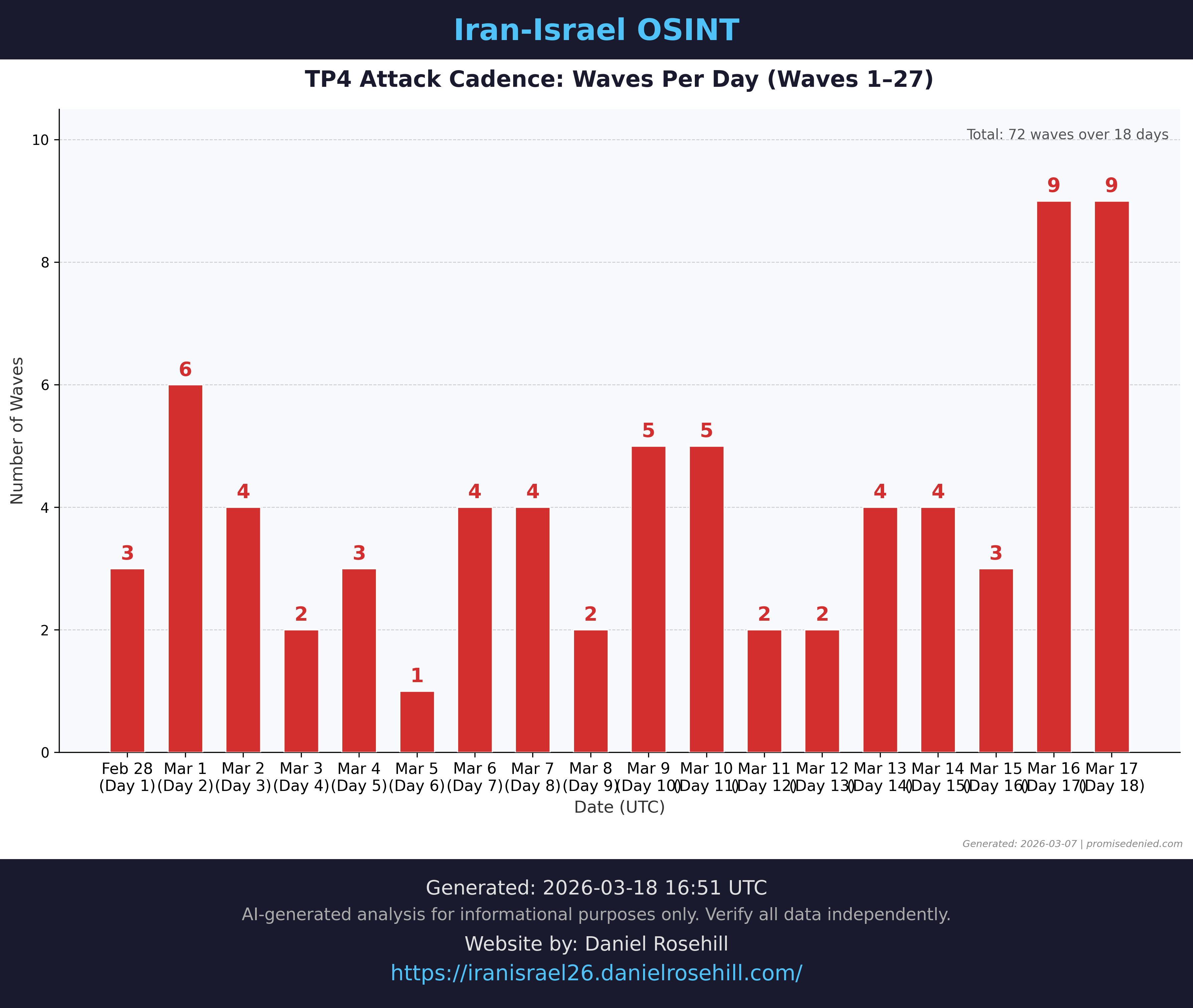
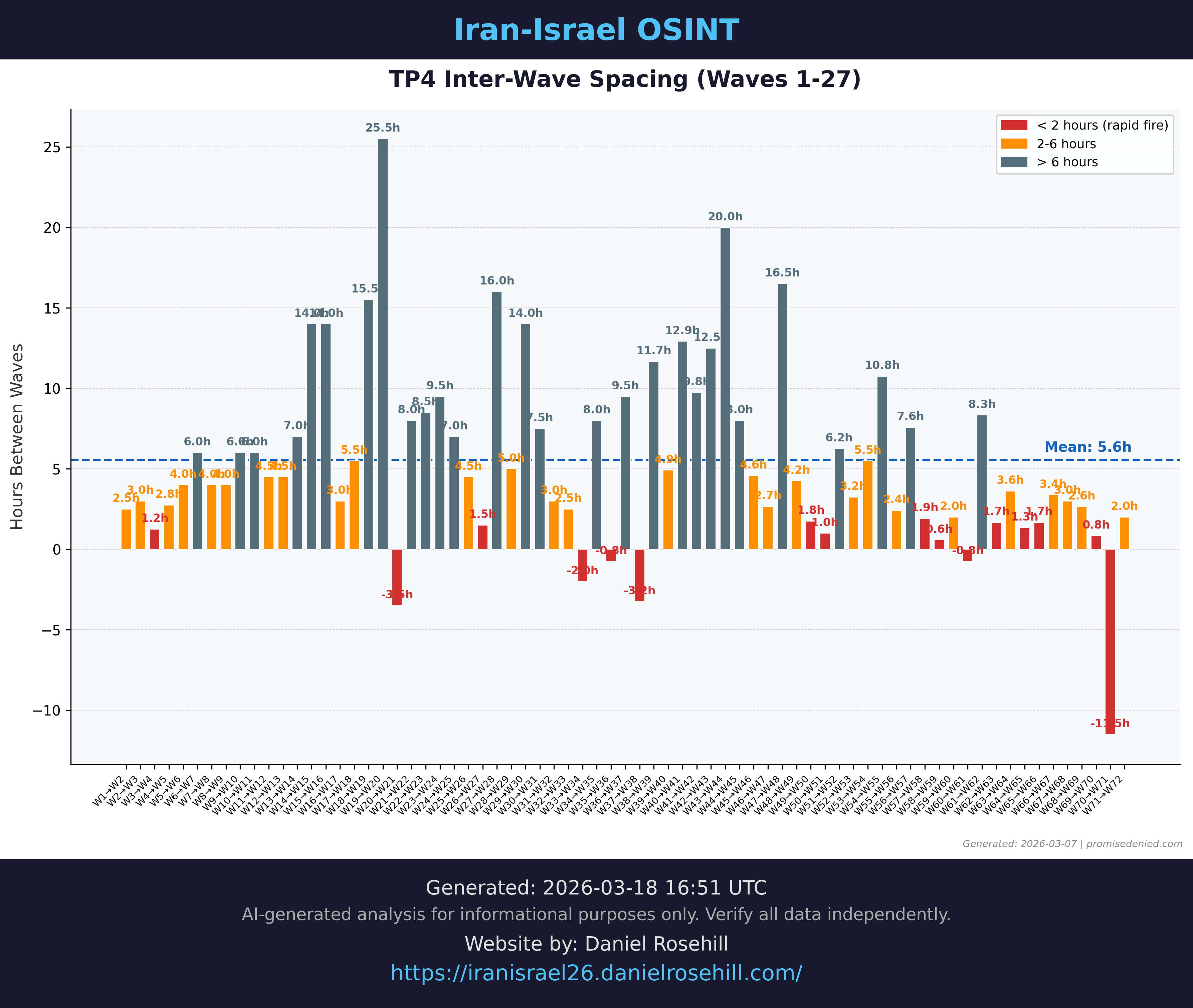
With three salvos on Day 7, TP4 has maintained its overall average of ~3.3 salvos per day across seven days. The 24-hour pause between Salvos 20 and 21 was not an end to operations but appears to have been a tactical regroup before escalation.
Geographic Expansion
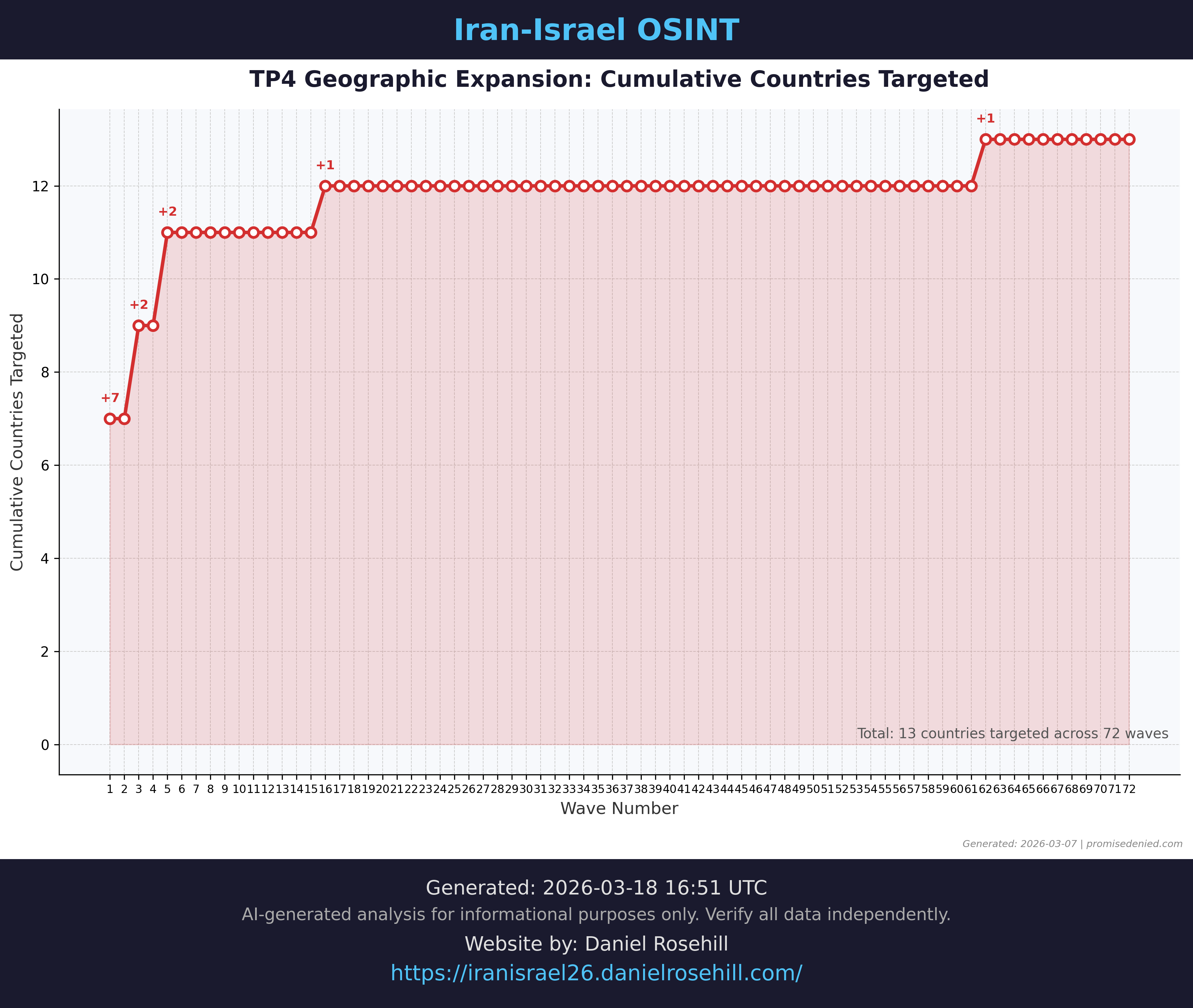
TP4's geographic footprint has expanded progressively. Early salvos focused on Israel alone, then expanded to US bases in the Gulf, and by Salvo 23 hit six countries simultaneously. The cumulative targeting now spans 12+ countries across the Middle East and beyond.
Capability Escalation
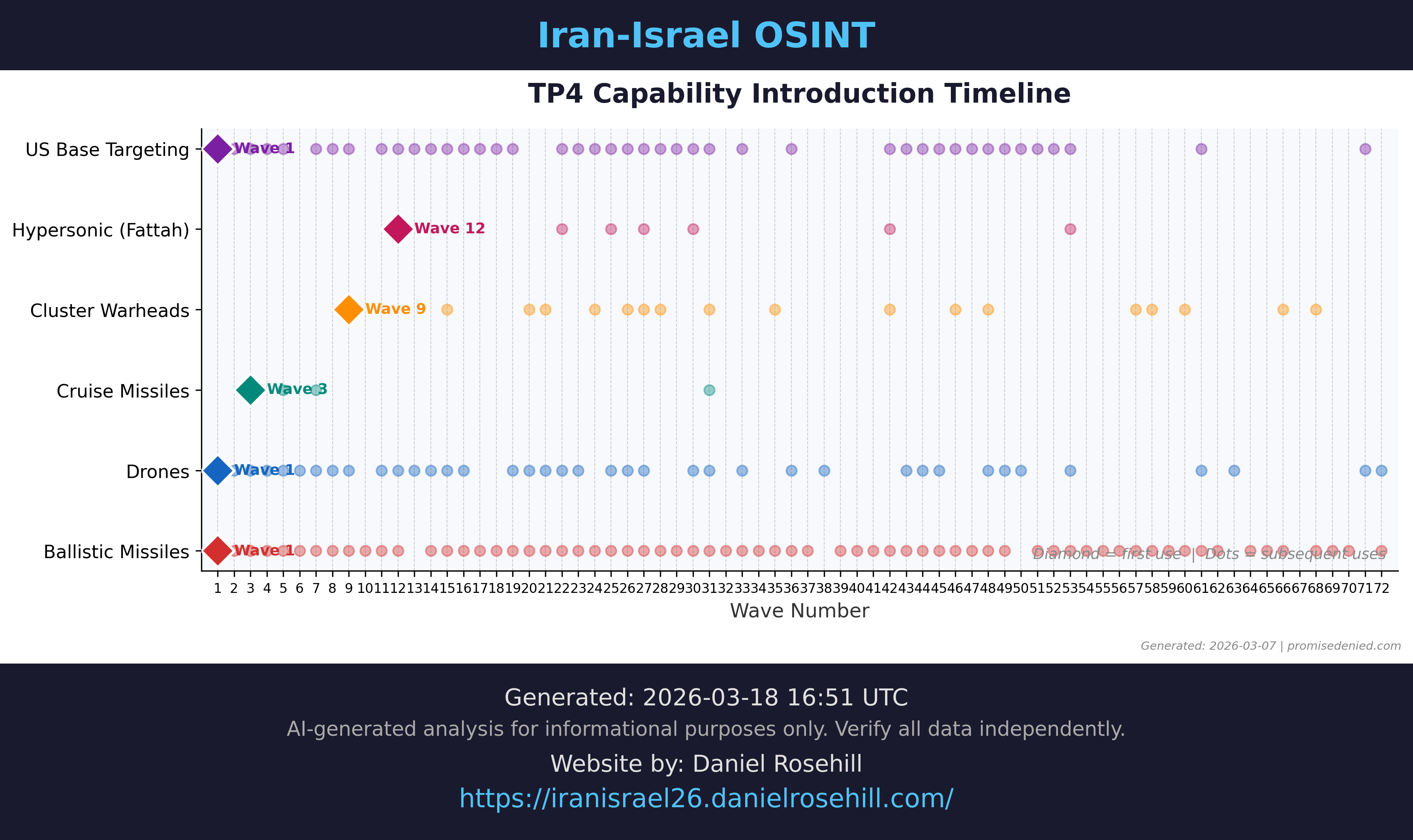
Day 7 saw the introduction of two new weapon systems. The capability timeline shows how Iran has progressively introduced more advanced systems across TP4 — starting with standard BMs and drones, adding cluster warheads by Salvo 20, and now deploying hypersonics and heavy Khorramshahr-4 missiles.
Key Takeaways
- Qualitative leap: Khorramshahr-4 and Fattah represent Iran's most advanced deployed systems. Their introduction suggests Iran is committing top-tier inventory to TP4.
- Critical infrastructure targeting: Ben Gurion Airport targeting is a significant escalation, threatening Israel's international air connectivity.
- Retaliation cycle: The explicit "Minab school" framing signals an action-reaction dynamic that could sustain extended operations.
- Six-country simultaneous strike: Salvo 23's geographic spread forces coalition resources to distribute across the widest possible theater, testing coordination and capacity.
- No end-state declared: The IRGC has not announced the conclusion of TP4. Operations are assessed as ongoing.